


Empowering Farmers, Enriching Lives: The Story Behind Village-Sourced Foods
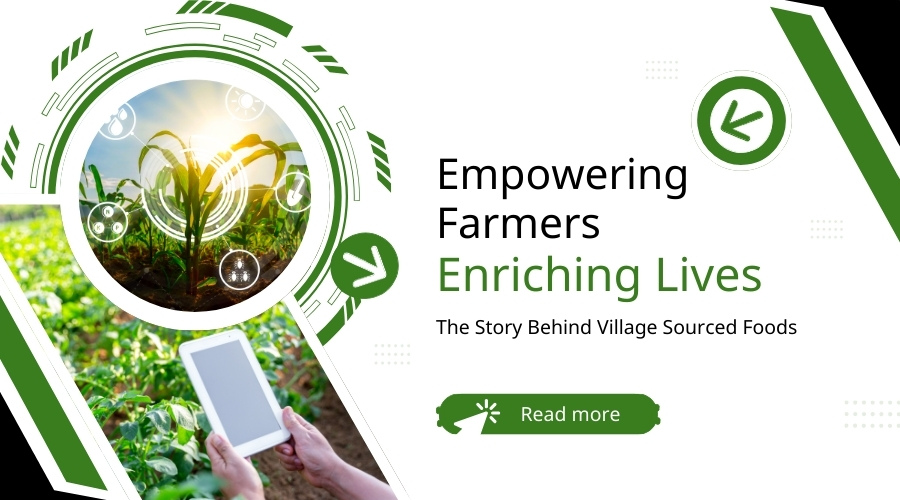
Village-sourced foods are refreshing and steeped in tradition, sustainability, and empowerment in an increasingly urbanized and industrialized world. Beyond mere ingredients, village-sourced foods embody the toil and culture of small-scale farmers, contributing to a healthy planet and a growing economy. Behind village-sourced foods is a story of resilience, innovation, and collaboration, transforming lives and creating closer relationships between producers and consumers.
Village-sourced food is refreshing and steeped in tradition in today’s era of industrialization and urbanization. It empowers farmers and is sustainable for growth.
The Backbone of Rural Economies
For many small-holder farmers, farming is an inherited culture and not just about earning a living. As with any business, challenges such as market trends, climate change, and the absence of appropriate fair trade integration can harm these farmers. Village-sourced food initiatives that create sales avenues directly between consumers and producers aim to solve these challenges, allowing farmers to receive sufficient compensation for their hard work.
Typically, such programs promote the use of organic and traditional practices per farm to ensure better and cleaner food production and, at the same time, facilitate environmental conservation. Their initiatives to decrease such activities lead to soil rehabilitation, moisture conservation, and reduced reliance on chemical fertilizers with harmful consequences.
Building a Direct Connection
Village-sourced food initiatives are essential in linking rural producers and urban consumers. Roughly speaking, these are programs to eliminate middlemen and not aim to bore the consumers since the producers’ profitability optimizations. Food items such as grains, pulses, spices, and fruits are unique in that they never lose their luxury, and their fresh flavor is nothing like what processed, mechanized factory items contain.
Direct partnerships promote transparency. Consumers know everything concerning their food: where it comes from, how it was cultivated, and who cultivated it. All this knowledge earns confidence, and more connections between communities are developed.
Women’s Empowerment in Farming Activities
Women are involved in agricultural activities in several rural settings, but their work must be recognized. Women farmers are often the target beneficiaries of village-sourced food programs, as they are offered training, inputs, and market linkages. Not only does this increase the family's income, but it also improves the position of women in their communities, thus serving a multiplier effect of economic and social development.
Safeguarding Cultural Practices
Village-sourced foods speak for the necessity of conserving agricultural practices and their importance. Several such projects promote some age-old farming practices, some local crops, and local food processing practices that have developed over time and through many different influences. These practices are more sustainable than those from developed economies and practices and help conserve species diversity by preserving the indigenous species of plants.
Why It Matters
First, choosing foods from the villages defies the corporate-controlled system. Every Rupee spent helps provide fair compensation for farmers, safeguards nature, and promotes better health. In addition, this movement builds self-esteem in rural areas by recognizing their importance in the food chain.
Conclusion
Village-sourced foods are more than just ingredients; they represent empowerment, sustainability, and health. Embracing village-sourced foods allows for a connection between rural communities and conscious consumers, moving the community closer to the origins of nourishment. At Bharat ka Swaad, we celebrate the richness of those foods while changing the farmers' lives in the present and the future with sustainable food systems.
Validate your login